
-429a29e90b37.webp) Counter Strike 2
Counter Strike 2CS2 Maps Guide: Every Active Duty Map Explained
Map knowledge is one of the biggest factors separating beginner Counter Strike 2 players from experienced competitors. While aim and reaction time are important, understanding each map allows you to predict enemy movements, position yourself more effectively, and make smarter decisions throughout every round. Many matches are won because one team has superior map awareness rather than better mechanics.
Every map in the Active Duty pool has its own layout, common strategies, choke points, and utility lineups. Learning these unique characteristics helps you attack bombsites more efficiently, defend key positions, rotate faster, and communicate clearly with your teammates. Even simple knowledge, such as knowing the fastest rotation route or the name of a common callout, can make a significant difference during competitive matches.
Instead of trying to memorize every detail immediately, focus on understanding the purpose of each area. Learn where attackers usually enter, where defenders commonly hold angles, and which locations become important during post plant situations. As your experience grows, these patterns will become second nature.
In this guide, we'll explain every Active Duty map, highlight its defining features, and share beginner friendly tips to help you feel more confident regardless of which battleground appears in your next match.
Why Map Knowledge Matters
Learning maps isn't just about remembering where bombsites are located.
Strong map knowledge helps you:
Rotate faster between bombsites.
Predict enemy positions.
Use utility more effectively.
Understand common angles.
Communicate with teammates using standard callouts.
Improve positioning during retakes and executes.
The better you know a map, the fewer surprises you'll encounter during a match.
Understanding the Active Duty Map Pool
The Active Duty map pool is the collection of maps used in Premier tournaments and most high level competitive play.
Although Valve occasionally rotates maps in and out of the pool, every Active Duty map is carefully designed to encourage balanced gameplay between Terrorists and Counter Terrorists.
Each map rewards different skills, from precise aim and utility usage to communication and teamwork.
Mirage
Mirage is one of the most iconic Counter Strike maps and is often recommended as the best starting point for beginners.
Its balanced layout makes it easy to learn while still offering plenty of strategic depth.
Key Areas
A Site
B Site
Mid
Connector
Palace
Apartments
Jungle
Window
Beginner Tips
Control Mid whenever possible.
Learn basic Smoke Grenades for Window and Connector.
Always clear Palace before entering A Site.
Communicate enemy positions using proper callouts.
Mirage rewards teams that coordinate utility and fight for Mid control.
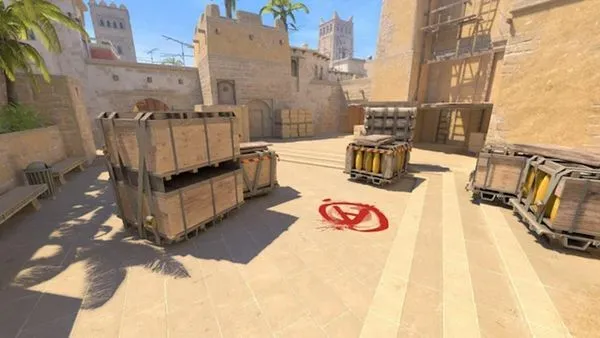
Inferno
Inferno is a slower, utility heavy map where teamwork is often more important than individual aim.
Many rounds revolve around controlling Banana and Mid.
Key Areas
Banana
Mid
Apartments
Arch
Library
A Site
B Site
Beginner Tips
Avoid pushing Banana alone.
Save utility for late round executes.
Learn basic Smoke and Molotov placements.
Play patiently instead of rushing.
Inferno heavily rewards communication and disciplined positioning.
Dust II
Dust II remains one of the most recognizable maps in Counter Strike history.
Its straightforward layout makes it accessible for beginners while still offering high level tactical depth.
Key Areas
Long A
Short (Catwalk)
Mid
B Tunnels
Upper Tunnels
Lower Tunnels
Beginner Tips
Contest Long with teammates.
Be cautious of Mid picks early in the round.
Use flashes before exiting tunnels.
Learn common AWP positions.
Dust II emphasizes strong aim and good positioning.
Nuke
Nuke is one of the most unique maps in Counter Strike due to its multiple vertical levels.
Rotations happen much faster than on most maps, making communication especially important.
Key Areas
Outside
Heaven
Hut
Lobby
Ramp
Secret
Upper Site
Lower Site
Beginner Tips
Learn the fastest rotations between sites.
Watch for players using vents.
Coordinate utility before taking Outside.
Communicate quickly because rotations happen rapidly.
Nuke rewards organized teams more than individual hero plays.
Ancient
Ancient is known for its tight choke points, heavy utility usage, and emphasis on map control. While it may seem overwhelming at first, learning a few key areas will greatly improve your confidence on the map.
Key Areas
A Site
B Site
Mid
Donut
Cave
Temple
Ramp
Beginner Tips
Don't rush through narrow choke points without utility.
Learn simple Smoke Grenades for Cave and Donut.
Fight for Mid control whenever possible.
Check close corners carefully before entering bombsites.
Ancient rewards patient teams that communicate and coordinate their utility.
Anubis
Anubis is one of the newer additions to the competitive map pool and features long sightlines mixed with tight bombsite entrances.
Unlike many classic maps, Anubis provides several aggressive opportunities for both attackers and defenders.
Key Areas
A Site
B Site
Mid
Canal
Bridge
Heaven
Connector
Beginner Tips
Be careful when crossing Mid.
Use Smokes before attacking bombsites.
Don't overextend after winning an opening duel.
Learn common defensive angles.
Anubis often rewards aggressive but coordinated play.
Train
Train returned to Counter Strike 2 with updated visuals while maintaining its classic layout. It remains one of the most tactical maps in the game, rewarding communication, utility usage, and intelligent positioning.
Key Areas
A Site
B Site
Ivy
Popdog
Main
Heaven
Connector
Beginner Tips
Always clear elevated positions before entering bombsites.
Use utility to block long sightlines.
Work with teammates instead of attacking alone.
Learn the common sniper positions around the map.
Train can feel intimidating at first, but understanding its layout makes rotations and site executions much easier.
Learning Callouts
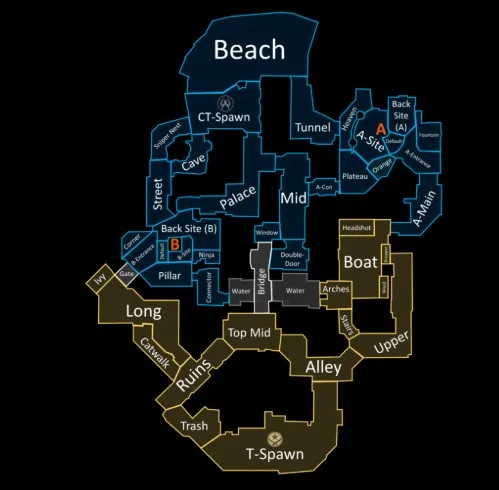
Every competitive map has standardized names for important locations.
Using proper callouts allows teammates to react immediately without confusion.
Examples include:
Window
Connector
Heaven
Long
Short
Banana
Ramp
Palace
Catwalk
Secret
Instead of saying "He's over there," communicate using map callouts whenever possible.
Good communication often wins rounds before shots are even fired.
How to Learn Maps Faster
Trying to memorize every angle at once can be overwhelming.
Instead, learn one map at a time.
A good routine includes:
Play several matches on the same map.
Walk around in a private lobby.
Practice grenade lineups.
Learn common callouts.
Watch experienced players.
Review your own matches.
Focusing on one map before moving to the next makes learning much easier.
Common Map Mistakes
Many new players struggle because they develop poor habits early.
Here are some mistakes to avoid.
Ignoring Mid Control
Mid often provides the fastest rotations and the most map control.
Giving it away for free usually allows the enemy team to dictate the round.
Rotating Too Early
Leaving your bombsite after hearing a few footsteps is risky.
Experienced teams frequently fake attacks to pull defenders out of position.
Wait for reliable information before committing to a rotation.
Forgetting Utility
Running into bombsites without using Smokes or Flashbangs gives defenders a significant advantage.
Even simple utility usage can dramatically increase your chances of winning an execute.
Holding the Same Position Every Round
Predictable positioning makes you easier to counter.
Mix up your angles, utility timing, and defensive positions to keep opponents guessing.
Poor Communication
Knowing callouts is only useful if you actually use them.
Keep your information:
Short
Clear
Accurate
Avoid unnecessary chatter during critical moments.
Conclusion
Learning the Active Duty maps is one of the best investments you can make as a Counter Strike 2 player. While strong aim helps you win duels, understanding each map's layout, rotations, callouts, and common strategies allows you to make smarter decisions throughout every round. The more familiar you become with each environment, the more confidently you'll position yourself, support your teammates, and anticipate enemy movements.
Don't feel pressured to master every map immediately. Start with beginner friendly maps like Mirage and Dust II, then gradually expand your knowledge to more complex maps such as Nuke, Ancient, Anubis, and Train. By consistently practicing one map at a time and combining good communication with solid game sense, you'll become a more reliable teammate and significantly improve your overall performance in Counter Strike 2.