
-429a29e90b37.webp) Counter Strike 2
Counter Strike 2CS2 Economy Guide: Buying, Eco Rounds & Money Management
One of the biggest differences between Counter Strike 2 and many other first person shooters is its economy system. Winning gunfights is important, but managing your team's money is just as critical. Even the most mechanically skilled players can lose matches if they make poor buying decisions or fail to coordinate with their teammates.
Every round in CS2 presents a financial decision. Should your team invest everything into rifles and utility? Is it better to save money for the following round? Should you risk a Force Buy to prevent the enemy from building momentum? Understanding these choices can dramatically increase your chances of winning, especially in Competitive and Premier modes.
Many beginners focus only on purchasing the strongest weapon they can afford, but experienced players think several rounds ahead. They consider not only their own money but also the economy of the entire team. A coordinated purchase often gives your team a much better chance of success than five players buying different weapons at different times.
In this guide, you'll learn how the CS2 economy works, the different types of buy rounds, common mistakes to avoid, and practical strategies that will help your team stay financially competitive throughout a match.
Why the Economy Matters
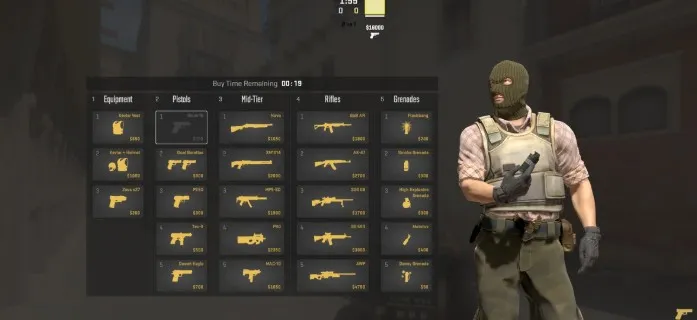
Unlike many shooters where everyone starts each round with the same equipment, Counter Strike 2 rewards good financial planning.
Winning the economy battle allows your team to:
Purchase stronger weapons.
Buy full armor consistently.
Afford grenades every round.
Replace lost rifles more easily.
Maintain pressure on the enemy team.
Teams with a healthy economy often control the pace of the game because they have access to better equipment more frequently.
How Money Works in CS2
Every player earns money throughout a match based on their actions and the outcome of each round.
You can earn money by:
Winning rounds.
Losing rounds (through the loss bonus).
Eliminating opponents.
Planting the bomb as Terrorists.
Defusing the bomb as Counter Terrorists.
The exact amount varies depending on the situation, but understanding where money comes from helps you make smarter purchasing decisions over the course of a match.
The Four Main Types of Buy Rounds
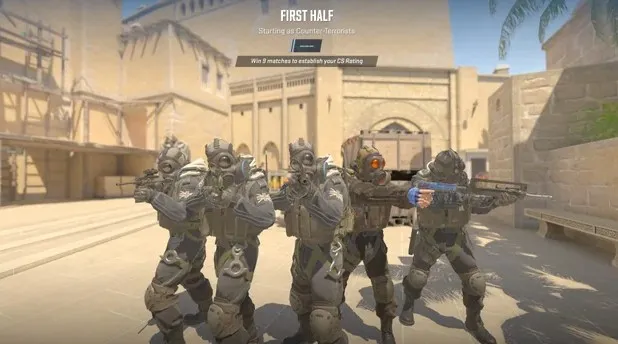
One of the first concepts every CS2 player should understand is the difference between the four main buy types.
Making the correct choice at the right time keeps your team financially stable and prevents rounds where some players have rifles while others are forced to use pistols.
Full Buy
A Full Buy is when your entire team purchases the strongest equipment they can reasonably afford.
A typical Full Buy includes:
Rifle or AWP
Full armor
Utility (grenades)
Defuse Kit (for Counter Terrorists)
This is the ideal situation because every player enters the round fully equipped.
Teams should aim to synchronize Full Buys so everyone has similar firepower.
Eco Round
An Eco Round is when your team intentionally spends very little money in order to save for the following round.
During an Eco Round, players often purchase:
Pistols
Light utility
Little or no armor
Although your chances of winning decrease, a successful Eco Round can severely damage the enemy team's economy and completely change the momentum of a match.
Force Buy
A Force Buy occurs when your team spends nearly all of its available money despite not being able to afford a complete Full Buy.
Common Force Buy weapons include:
SMGs
Shotguns
Budget rifles
Pistols with armor
Force Buys are often used when losing another round would put the team in an even worse financial position.
However, forcing too often can leave your team unable to recover economically.
Half Buy
A Half Buy sits between a Force Buy and an Eco Round.
Players spend only part of their money while saving enough to afford rifles in the next round.
This strategy allows your team to remain somewhat competitive without completely sacrificing future buying power.
Understanding the Loss Bonus
One of the most important mechanics in CS2 is the loss bonus.
Each consecutive round your team loses increases the amount of money awarded after the next loss, up to a certain limit.
This system helps prevent one team from becoming permanently stuck with weak equipment and gives losing teams opportunities to recover.
Understanding the loss bonus helps determine whether saving or forcing is the smarter decision.
When Should You Save?
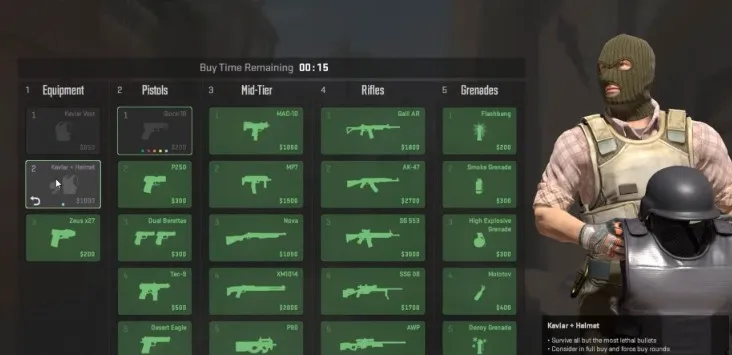
Saving isn't always exciting, but it's often the correct decision.
If you're unlikely to win the current round, preserving expensive weapons can be more valuable than attempting a low percentage retake or fight.
Situations where saving is often recommended include:
You're heavily outnumbered.
Your team has little remaining utility.
The bomb timer is too low.
You have an expensive rifle or AWP to carry into the next round.
Saving equipment can strengthen your team's economy and improve your chances in future rounds.
Managing Team Economy
One of the biggest differences between average players and experienced teams is how they manage money as a group.
Many beginners only look at their own balance, but Counter Strike 2 is a team game. Five players making coordinated purchases is almost always stronger than five players buying independently.
Before every round, quickly check your teammates' money.
Ask yourself:
Can everyone afford rifles?
Does someone need a weapon drop?
Should the entire team save?
Is everyone buying utility?
Sometimes dropping an AK 47 or M4 for a teammate is far more valuable than buying yourself an expensive secondary weapon.
Strong team economy wins matches.
When to Force Buy
Force Buying is one of the most misunderstood strategies in CS2.
Many new players force every time they lose a round, which often leads to another defeat and an even weaker economy.
A Force Buy is usually appropriate when:
Losing another round would put the enemy on match point.
Your team believes it has a strong tactical advantage.
Most teammates can still afford armor and useful weapons.
You need to stop the enemy's momentum.
Force Buying should be a calculated decision not an emotional reaction.
When an Eco Round Is the Better Choice
Although nobody enjoys using pistols against rifles, Eco Rounds are an essential part of Counter Strike.
Saving money now often leads to a much stronger Full Buy in the next round.
During an Eco Round:
Stay together.
Stack one bombsite if defending.
Trade kills.
Use numbers instead of expensive equipment.
Try to damage the enemy economy.
Even eliminating two or three opponents can make the next few rounds easier.
Why Utility Is Part of the Economy
Many players think economy only means buying rifles.
In reality, grenades are just as important.
A rifle without utility is often weaker than a slightly cheaper weapon with:
Smoke Grenades
Flashbangs
HE Grenades
Molotovs or Incendiary Grenades
Utility allows teams to:
Delay pushes.
Clear dangerous angles.
Execute bombsite takes.
Retake bombsites.
Deny enemy vision.
Whenever possible, budget enough money for grenades instead of spending everything on your primary weapon.
Common Economy Mistakes
Managing money is one of the hardest skills for beginners to learn.
Avoid these common mistakes.
Buying Every Round
Spending all your money after every loss usually leaves your team permanently behind.
Sometimes saving is the smartest decision.
Ignoring Your Teammates' Economy
Buying an expensive rifle while three teammates only have pistols creates an uneven team.
Coordinated buys are much stronger than individual purchases.
Forgetting Utility
Many beginners purchase rifles but skip grenades.
Good utility often wins rounds before the shooting even begins.
Saving Too Often
While saving is important, doing it every difficult round can also be a mistake.
There are situations where taking a calculated Force Buy is the correct play.
Learning to recognize these situations comes with experience.
Not Dropping Weapons
If you have plenty of money and a teammate can't afford a rifle, buying one for them is usually the correct decision.
A fully equipped teammate contributes much more than unused money sitting in your account.
Economy Tips for Beginners
If you're just starting Counter Strike 2, these habits will improve your economy immediately:
Buy with your team.
Learn the difference between Full Buy, Half Buy, Force Buy, and Eco.
Prioritize armor and utility.
Drop weapons when possible.
Don't panic buy after every loss.
Think two or three rounds ahead.
Communicate before purchasing.
Good economy management is about planning, not reacting.
Conclusion
Mastering the economy system is one of the biggest steps toward becoming a better Counter Strike 2 player. While accurate aim and fast reactions win individual duels, smart financial decisions help your team stay competitive throughout an entire match. Knowing when to Full Buy, Eco, Force Buy, or Save ensures that your team has the best possible chance of winning not just the current round, but the next several rounds as well.
Remember that economy management is a team responsibility. Communicate before buying, keep an eye on your teammates' money, and don't be afraid to sacrifice a little of your own economy to help the team succeed. Over time, these habits will become second nature, giving you a significant advantage over players who focus only on their own purchases.