

 League of Legends
League of Legends Tier List: Best Champions for Every Rank 2026
Choosing the right champion can make climbing the ranked ladder much easier in League of Legends. While player skill will always be the biggest factor in winning games, certain champions consistently perform better because of their strong abilities, flexibility, and effectiveness in the current meta.
A tier list isn't simply a ranking of the strongest champions. Instead, it considers how reliable each champion is across different skill levels, how difficult they are to master, and how well they perform in solo queue. Some champions dominate high level competitive play but are difficult for beginners, while others remain excellent choices for players learning the game.
It's also important to remember that League of Legends receives frequent balance updates. Champion strengths can shift from patch to patch, but many champions remain consistently effective thanks to versatile kits, reliable damage, and strong utility. Learning these dependable picks can help you improve without constantly changing your champion pool.
In this guide, we'll explain how tier lists work, what makes a champion strong, and recommend some of the best champions for each role to help you climb regardless of your current rank.

Understanding the Tier System
Tier lists group champions based on their overall effectiveness rather than assigning every champion an exact numerical ranking.
Generally, you'll see the following tiers:
S Tier
S Tier champions are the strongest and most reliable picks in the current meta.
They usually offer:
High win rates.
Strong matchups.
Reliable abilities.
Excellent carry potential.
Consistent performance.
These champions are often first pick or first ban choices in ranked games.
A Tier
A Tier champions are still extremely strong but may have slightly more weaknesses or require better execution.
They remain excellent choices for most players and are often easier to play than some S Tier champions.
B Tier
B Tier champions are balanced options.
They can perform well in the right hands but usually depend more on favorable matchups or player experience.
C Tier
C Tier champions are generally more situational.
They aren't necessarily weak, but they often require specific team compositions or significantly more skill to achieve consistent results.
What Makes a Champion Strong?
Several factors determine whether a champion belongs in a higher tier.
Consistency
Reliable champions perform well in most games regardless of the matchup.
Flexibility
Champions that can adapt to different team compositions or item builds often remain valuable throughout multiple patches.
Ease of Execution
A champion with straightforward mechanics can produce consistent results for more players than one requiring perfect execution.
Team Fight Impact
Champions that contribute meaningful damage, crowd control, or utility during team fights naturally become stronger choices.
Objective Control
Some champions excel at securing Dragons, Baron Nashor, towers, or other objectives, increasing their overall value.
Best Top Lane Champions
Top lane rewards champions who combine durability, lane control, and strong scaling.
Excellent choices include champions that can:
Win extended duels.
Split push effectively.
Frontline for the team.
Pressure side lanes.
Reliable top lane champions often remain useful even when slightly behind because of their durability and crowd control.
Best Jungle Champions
Strong junglers usually provide:
Fast camp clears.
Reliable ganks.
Objective control.
Mobility.
Consistent pressure across the map.
The best jungle champions create advantages for teammates while maintaining efficient farming routes.
Best Mid Lane Champions
Mid lane champions should offer:
Strong wave clear.
Roaming potential.
High burst damage or sustained DPS.
Team fight impact.
Because mid lane sits at the center of the map, these champions often influence every objective and both side lanes.
Best ADC Champions
The strongest ADC champions generally excel at:
Consistent damage.
Late game scaling.
Objective damage.
Team fight positioning.
A reliable ADC can become one of the primary win conditions during longer matches.
Best Support Champions
Supports remain valuable through:
Crowd control.
Vision control.
Team utility.
Protecting carries.
Initiating fights.
Even without dealing massive damage, great support champions often determine the outcome of important team fights.
Best Champions for Beginners
If you're new to League of Legends, it's better to choose champions with straightforward abilities and forgiving playstyles rather than trying to master mechanically demanding picks. Simpler champions let you focus on learning farming, positioning, map awareness, and objectives instead of worrying about complicated combos.
For example, Top lane beginners often enjoy durable fighters that can survive mistakes, while Mid lane players benefit from champions with reliable wave clear. ADC players should look for champions with consistent damage and simple mechanics, and Support players can start with champions that offer strong crowd control or healing without requiring perfect execution.
Learning a small champion pool is usually much more effective than switching between dozens of champions.
Best Champions for Climbing Ranked

Climbing the ranked ladder isn't about constantly picking whatever champion has the highest win rate. Instead, consistency is usually the biggest advantage.
Players who perform well in ranked often:
Master a small champion pool.
Understand their matchups.
Know their power spikes.
Play champions they're comfortable with.
Adapt their item builds to each game.
Playing one or two reliable champions repeatedly will usually produce better results than constantly chasing the newest meta pick.
Should You Always Follow the Meta?
The meta changes regularly as Riot Games releases balance patches, adjusts items, and reworks champions. While the strongest champions often provide an advantage, following the meta isn't always necessary.
If you've mastered a champion that isn't considered top tier, you'll often outperform someone playing a stronger champion they barely understand.
Meta picks matter more at higher ranks, where players make fewer mistakes and understand how to maximize every advantage. For most players, champion mastery remains more important than tier placement.
The best approach is to use tier lists as a guide rather than a strict rulebook.
How Often Do Tier Lists Change?
League of Legends receives balance updates throughout the year, meaning champion rankings can shift over time.
A tier list may change because of:
Champion buffs.
Champion nerfs.
Item adjustments.
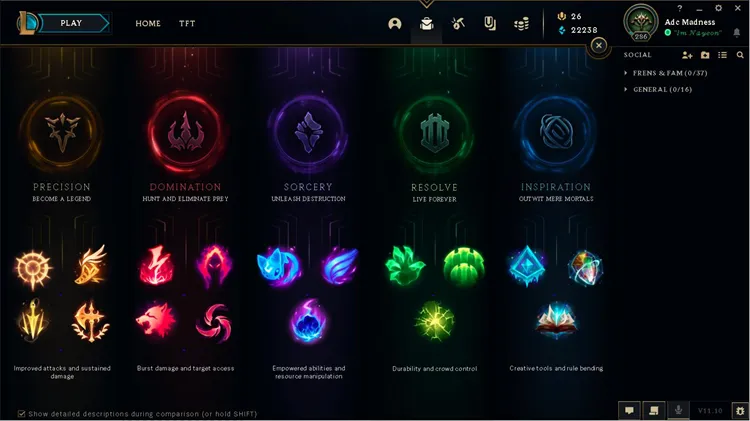
Rune changes.
Objective changes.
Professional play influencing the solo queue meta.
Some champions move dramatically after major patches, while others remain reliable regardless of the current meta because of their versatile kits.
Checking updated tier lists after significant patches is a good habit, but there's rarely a need to abandon a champion you've already mastered.
How to Choose the Right Champion
When selecting a champion, consider more than just their tier.
Ask yourself:
Do I enjoy this playstyle?
Does this champion fit my preferred role?
Am I comfortable with their mechanics?
Can I play this champion consistently?
Will I still enjoy learning them after dozens of matches?
A champion you enjoy practicing will almost always help you improve faster than one you picked solely because they're considered powerful.
Common Champion Selection Mistakes
Many players unintentionally make climbing more difficult by choosing champions for the wrong reasons.
Playing Too Many Champions
Switching champions every few games makes it difficult to build muscle memory and understand matchups.
Instead, focus on mastering a small champion pool.
Copying Professional Players
Professional players compete in an environment that's very different from solo queue.
Champions that dominate professional play often require exceptional teamwork and communication, making them much harder to use effectively in regular ranked games.
Ignoring Team Composition
A powerful champion isn't always the right pick.
Sometimes your team needs:
A frontline tank.
Crowd control.
Magic damage.
Physical damage.
Reliable engage.
Considering your team's overall composition often leads to better results than simply locking in your favorite champion.
Chasing Every New Meta Pick
Many players switch champions every time a patch changes the rankings.
This usually slows improvement because they never spend enough time mastering one champion.
Consistency almost always beats constantly changing your champion pool.
Conclusion
A League of Legends tier list is a valuable tool for understanding which champions are performing well, but it shouldn't be the only factor influencing your decisions. The strongest champions combine reliability, flexibility, and consistent impact, yet true improvement comes from mastering the champions you enjoy playing and learning how to use them effectively in different situations.
As the meta evolves with future patches, champion rankings will continue to change. Rather than constantly chasing the newest top tier pick, focus on developing a small, dependable champion pool and improving your mechanics, decision making, and game knowledge. By combining champion mastery with a solid understanding of the current meta, you'll give yourself the best chance to climb the ranked ladder and become a more confident League of Legends player.